

5 Steps on How to Publish an Autobiography Successfully
- StoriedLife Team
- 1 day ago
- 8 min read
Updated: 7 hours ago
Introduction
Sharing your life story can feel overwhelming, but it’s also a beautiful opportunity to connect with others on a deeper level. This guide will gently walk you through the essential steps to publish your autobiography, helping you define its scope and engage readers with your unique story. But as you think about sharing your story, you might wonder: how can your personal experiences become powerful narratives that resonate with others?
Define Your Autobiography's Type and Scope
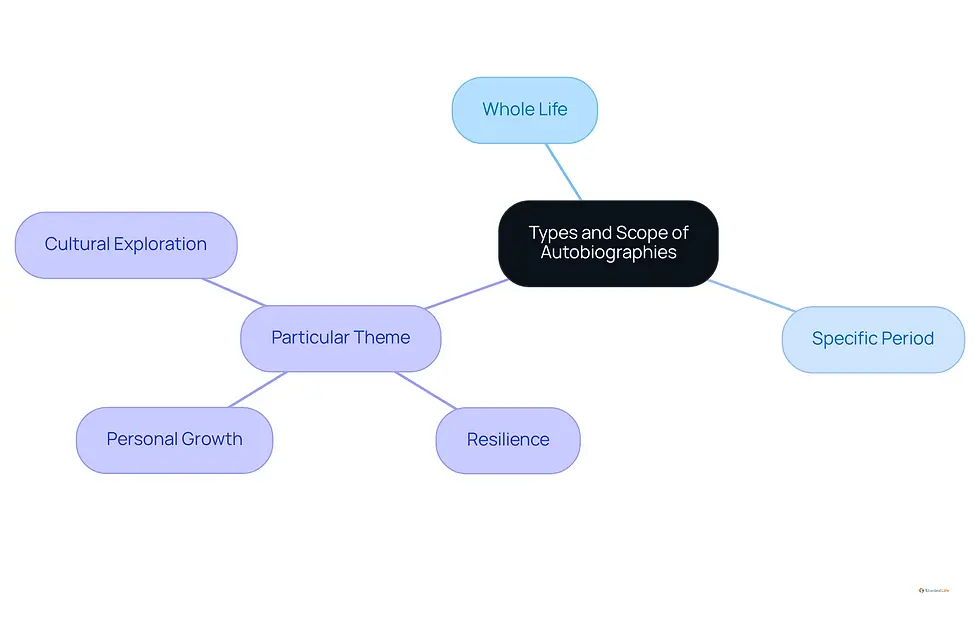
Have you ever felt the weight of your own story, unsure of how to share it with the world? Begin by determining how to publish an autobiography that reflects the type you wish to write. Consider whether you want to focus on your whole existence, a specific period, or a particular theme. You might opt for a traditional autobiography that chronicles your life chronologically, or you may want to learn how to publish an autobiography that hones in on a significant event or theme, such as overcoming adversity or exploring your cultural heritage.
Take a moment to reflect on the scope of your autobiography, considering what truly matters to you. Identify the key events or experiences you want to include. Make a list of pivotal moments that have shaped your identity, such as personal triumphs, challenges, or transformative experiences. This process will help you maintain a clear direction as you write, ensuring that your story remains focused and engaging for your readers.
In 2026, themes like resilience, personal growth, and cultural exploration resonate deeply. They reflect our desire for diverse stories that connect us. Successful autobiographies often focus on particular themes or occurrences, enabling readers to connect profoundly with the author's journey. Concentrating on specific themes can amplify the emotional effect of your narrative, allowing it to connect more deeply with your audience. By embracing your unique journey, you can inspire others and create a lasting connection through your words.
Conduct Research and Create an Outline
Have you ever felt the weight of your memories and wondered how to publish an autobiography to bring them to life? Begin by collecting details about how to publish an autobiography. This can include personal journals, letters, photographs, and family records. You might even consider reaching out to family members or friends who can share insights or anecdotes that you may have forgotten. Imagine having heartfelt conversations that help you uncover those deeper memories and narratives that might not emerge through conventional methods.
Once you’ve gathered your cherished materials, let’s gently weave them into an outline that reflects your journey. Arrange your events chronologically or thematically, depending on the type of autobiography you’re writing. With StoriedLife, your narratives are automatically arranged into themed chapters, making it simpler to revisit and share your experiences. This interactive feature not only enhances the storytelling process but also enables you to capture the voice and emotion that make your tale unique. Break your outline into sections or chapters, each focusing on a specific period or theme. This will serve as a guide for your writing on how to publish an autobiography, assisting you in remaining focused and ensuring that you address all vital elements of your life narrative. With StoriedLife, you’re not just telling your story; you’re preserving the essence of who you are for generations to come.

Craft Your Story to Engage Readers
Have you ever felt the weight of your memories, wondering how to publish an autobiography that truly connects with others? To craft an engaging autobiography and understand how to publish an autobiography, consider how you can bring your experiences to life, allowing readers to feel every moment with you. Instead of just stating how you felt, dive into the sensations - the racing heart, the clammy palms, and the atmosphere swirling around you.
Incorporate personal anecdotes that vividly illustrate your key themes. These stories should evoke emotions and create a bond with your audience, making your account relatable. Remember, the pacing of your narrative matters; varying chapter lengths and the intensity of events can keep your readers engaged. When you weave emotions into your stories, they become unforgettable, leaving a lasting impression on your readers. Your ultimate goal is to create a narrative that informs, entertains, and resonates deeply with your audience.
With StoriedLife, you can explore how to publish an autobiography by converting your memories into a beautifully narrated story through dynamic conversations with an AI biographer that understands you. This innovative platform allows you to enhance your storytelling with rich multimedia elements, such as photos, voice notes, and audio clips, capturing not just words but the moments and emotions behind them. Imagine the joy of seeing your life’s story come alive, inviting others to share in your journey and emotions. Begin your complimentary 7-day trial with StoriedLife today and explore how easy it can be to transform conversations into a beautifully written life narrative book.
Edit and Revise Your Draft
Taking a step back after finishing your first draft can be a game-changer for your writing journey. This break allows you to return with fresh eyes, making it easier to spot areas that could use a little love. As you read through your work, pay attention to the flow and coherence. Are there sections where your story feels unclear? Maybe there are details that could enhance the emotional depth?
Imagine sharing your draft with a close friend, their fresh eyes revealing insights you might have missed. This is where StoriedLife's AI-powered app can step in, offering valuable prompts and guidance to refine your story and elevate your storytelling.
Remember what Stephen King says about 'killing your darlings' - it’s okay to let go of parts you love if they don’t serve your story. Focus on grammar, punctuation, and style in your next passes. Reading your work aloud can help you catch awkward phrasing and repetitive language.
As you navigate this process, keep in mind the wisdom of Robert M. Guion: it’s not about writing perfectly the first time; it’s about revising with care. Engaging a trusted friend or family member can provide invaluable feedback, revealing aspects you might have overlooked. Stay open to their suggestions; they might just help you see your work in a new light.
Additionally, consider utilizing StoriedLife's resources, like the 'Write Your Memoir' course, which offers structured guidance and personalized help to enhance your writing quality. Effective revisions often require multiple passes, and the emotional challenges of editing can be significant. Recognizing these challenges can assist you in navigating the process more effectively, ultimately enhancing the quality of your narrative and preserving your family's legacy. Embracing the editing process can transform your narrative into a heartfelt legacy that resonates with your loved ones.

Engage a Professional Editor and Publish Your Work
After pouring your heart into your manuscript, the next step is to seek the guidance of a professional editor. A good editor can be like a trusted friend, offering insights that help your story truly resonate with others. Their expertise in structural editing, copyediting, and proofreading is vital for achieving a polished final product.
Once you've polished your manuscript, it’s time to consider how to publish an autobiography and share your story with the world. Traditional publishing can feel like a big leap, with a publisher managing the printing and distribution. On the other hand, self-publishing gives you the reins, allowing you to control the entire process. Whichever path you choose, remember that knowing how to publish an autobiography can make all the difference in how your story touches hearts.
For those looking to preserve family narratives and create lasting legacies, consider using StoriedLife's AI-powered memoir application. This platform not only guides you through the writing process but also offers a personalized storytelling experience that can transform your personal narratives into cherished family legacies. With features like the 'Story of the Week' that keeps family members updated on story progress and a user-friendly interface, StoriedLife makes it easier than ever to capture and share your life story before it's too late.

Conclusion
Many aspiring authors feel daunted by the thought of sharing their life stories, yet this journey can be profoundly rewarding. By defining the type and scope of your narrative, conducting thorough research, and crafting a compelling story, you can create a manuscript that resonates deeply with readers. Each step, from outlining to editing and engaging a professional editor, plays a crucial role in refining your narrative and ensuring it captures the essence of your journey.
Key insights include:
The importance of focusing on specific themes that connect with audiences
The value of personal anecdotes in creating emotional bonds
The necessity of meticulous editing to enhance clarity and coherence
Utilizing tools like StoriedLife can simplify and enrich your writing process, making it easier to transform your personal memories into a polished autobiography. The choice between traditional and self-publishing further empowers you to share your story on your terms, ensuring your unique voice shines through.
Imagine the impact your story could have on someone else’s life, inspiring them to embrace their own journey. By taking these essential steps, you can successfully publish your autobiography and leave a lasting imprint on both your family and the broader community.
Frequently Asked Questions
How should I define the type and scope of my autobiography?
Start by determining whether you want to focus on your entire life, a specific period, or a particular theme. Consider if you prefer a traditional chronological autobiography or one that centers around significant events or themes, such as overcoming adversity or exploring cultural heritage.
What key elements should I consider when reflecting on the scope of my autobiography?
Identify pivotal moments that have shaped your identity, including personal triumphs, challenges, or transformative experiences. Make a list of these key events to maintain a clear direction as you write.
What themes resonate well in autobiographies?
Themes like resilience, personal growth, and cultural exploration resonate deeply with readers. Focusing on specific themes can enhance the emotional impact of your narrative and foster a stronger connection with your audience.
What steps should I take to conduct research for my autobiography?
Gather details from personal journals, letters, photographs, and family records. Consider reaching out to family members or friends for insights or anecdotes that may help you recall deeper memories and narratives.
How can I create an outline for my autobiography?
Arrange your gathered materials into an outline that reflects your journey, organizing events either chronologically or thematically. Breaking your outline into sections or chapters focusing on specific periods or themes will help guide your writing and ensure you cover all vital elements of your life narrative.
How does StoriedLife assist in the autobiography writing process?
StoriedLife automatically arranges your narratives into themed chapters, simplifying the storytelling process. This feature helps capture the voice and emotion of your experiences, preserving the essence of who you are for future generations.
List of Sources
Define Your Autobiography's Type and Scope The Best Memoirs: The 2026 NBCC Autobiography Shortlist (https://fivebooks.com/best-books/memoirs-2026-nbcc-autobiography-shortlist-grace-talusan) Biography and Memoir Coming April 2026 (https://harpercollins.co.uk/blogs/reading-lists/biography-and-memoir-coming-april-2026) Complete Statistics on Biographies and Personal Stories for 2025 - Meminto Stories (https://meminto.com/blog/complete-statistics-on-biographies-and-personal-stories-for-2025)
Craft Your Story to Engage Readers 39 Reading Statistics and Facts You Should Know (https://crossrivertherapy.com/research/reading-statistics) Storytelling Statistics 2026: 94+ Stats & Insights [Expert Analysis] - Marketing LTB (https://marketingltb.com/blog/statistics/storytelling-statistics) My favorite quotes from my favorite life writing books — Biographers Guild (https://biographersguild.com/blog/2024/1/15/my-favorite-quotes-from-my-favorite-life-writing-books) Complete Statistics on Biographies and Personal Stories for 2025 - Meminto Stories (https://meminto.com/blog/complete-statistics-on-biographies-and-personal-stories-for-2025) Interesting Quotes About Memoirs (https://areadersplace.net/memoir/quotes)
Edit and Revise Your Draft How to edit and improve your memoir — The Red Lounge for Writers (https://redloungeforwriters.com/finishing-up) Writers write about editing and editors: 22 quotes - Reading, Writing, Research (https://allpurposeguru.com/2021/04/writers-write-about-editing-and-editors-22-quotes) Editing Tips and Quotes from Acclaimed Authors | iUniverse (https://iuniverse.com/en/resources/writing-and-editing/editing-tips-and-quotes-from-acclaimed-authors)
Engage a Professional Editor and Publish Your Work 5 Reasons To Hire An Editor Before Self-Publishing | Janey Burton (https://janeyburton.com/hire-an-editor-before-self-publishing) Pros And Cons Of Traditional Publishing vs Self-Publishing | The Creative Penn (https://thecreativepenn.com/self-publishing-vs-traditional) Author Case Studies (https://silverwoodbooks.co.uk/author-case-studies) How to Hire a Book Editor: What Writers Should Know | The Novelry (https://thenovelry.com/blog/how-to-hire-a-book-editor)


Comments